The African fish eagle looks just like the American Bald eagle. Although located on different continents, they are related. It is also known as the African sea eagle. Usually found throughout sub-Saharan Africa wherever large bodies of water & abundant food supply occurs. They usually mate for life. The eagle is the national bird of Namibia & Zambia
Hi, I’m Linda Antin, an independent designer and filmmaker who loves nature.
Bateleur Eagle
This is considered a medium sized eagle, but one who is striking and considered one of the most colorful eagles in the world. It is the first one usually to come to any kill. This is a highly adapted hunter of the plains and prefers open habitats such as woodland savannas and grasslands. I think every day we were on safari we saw them soaring above us.
This blog is dedicated to a good friend of mine who actually got me interested in birds on one of the trips to Africa. I never was a birder, but Bill D. who wanted to stop at every single bird as we headed down into the Ngorongoro Crater, in Tanzania, had me begin looking for them by the end of the trip. Never realizing, birds give alarm calls to other animals letting them know there is a predator in the area. Now I love birding, photographing them and listening for them – thanks Bill D.
Join me next week as we come across baboons, elephant families and so much more. Thanks for following my blog and please let others know who love photography, travel & adventure to follow me on some amazing journeys.
Birds galore, Elephants in huge numbers, zebras “dazzling” the horizon, Impalas leaping through the air, lions roaring and the expanse of the land. All incorporate the feel of Kruger. The next few blogs will highlight my photography and hope to entice you into coming to South Africa with me in 2022.
Oxpeckers are usually found on the backs of large mammals such as giraffes, rhino, zebras, elephants and hippos. There are two different types: Yellow-billed & Red-billed, they both remove parasites but in different ways.
The Red-billed Oxpeckers has a slender, flattened bill used for “scissoring” parasite and grease formed from the hide of the animal. The Yellow-billed Oxpeckers has a stouter bill used to pluck the parasites off the hide. Both use their beaks to open wounds and scars from which they sip the blood. Not always a help to the animal it is doing it to.
The host also provides a platform for courtship displays and a ride to the final destination while getting cleaned up. It is a win-win situation.
Yellow-billed Oxpeckers on back of Cape buffalo
Crested Barbet
Animal Behavior
One of my favorite things to watch is animal behavior and interactions with other animals. The photo on the left of the Heron & Nile Crocodile was so much fun to witness. Nothing happened to the Heron, but we watched that croc get closer and closer while the heron seemed unaware of the danger.
Steenbok
African Spoonbill
Africa Spoonbills hunt for food by touch. The Spoonbill will rhythmically sweep its slightly open bill from side to side, grabbing any prey felt between its mandibles.
Hippoptamus are usually found in lagoons, channels, rivers & floodplains. They are considered the most dangerous animal in Africa. They look to me like giant pigs. They can be found during the day in the water with only the tiny ears, eyes & nostrils protruding above the surface.
Dusk is when they typically trudge inland to feed. They prefer slow moving or still water. Due to the weight of their muscles, they cannot float, but rather walk along the bottom. They usually paddle to stay on the surface.
When they dive under the water, a hippo will press its ears flat against its head. They also take a deep breath and close their nostrils tight. They can stay under for up to 5-6 minutes.
Hippos are hairless except for the nose, ears & tail. The tough hide will ooze a pink fluid. This helps the animal keep its skin from drying out in the hot sun & protect it from the sun. Some people believe the hippo is bleeding. Just remember to be aware of your surroundings, especially any walkways leading to water.
Saddle billed stork
Many more adventures through Kruger National Park to follow. I will have a whole series on Elephants, birds and so much more. Continue to follow and I hope you are enjoying all the photos. REMEMBER, any photo you see and would like to have on your office wall, home, give as a gift – I can do. Let me know and I can give you a price. I will be adding a store to this website very soon.
The iconic and majestic tree known as the Baobab tree, offers not only beauty, but, is part of many traditional African remedies & folklores. It is a prehistoric species which predates mankind. To me, when all the leaves are gone, it looks like an upside down tree with all the roots showing.
The Tree of Life & Positivity
The tree is native to the African savannah where the climate can be very dry & arid. The tree is famous in Madagascar and parts of Australia. Over time, the Baobab has adapted to it’s environment. During the rainy season it can absorb & store water in its massive trunk. It allows the tree to produce a nutrient-dense fruit in the dry season which provides food for many animals.
This tree grows in 32 African countries & can live up to 5,000 years. The tree can reach up to 30 meters and it has an enormous trunk. The shelter it provides along with food and water for animals and humans is why many communities in the savannah have made their villages close by the tree.
The fruit of the Baobab is one of the most nutrient dense foods in the world.
bark can be used & turned into rope, clothing, baskets, musical instrument strings & waterproof hats
seeds make cosmetic oils
leaves are edible
trunks store water
fruit is rich in nutrients & antioxidants
Baobabs are difficult to kill, they can be burnt or stripped of bark and they will just form new bark & carry on growing.
Baobabs are one of my favorite trees to photograph, especially against a sunset. As we moved along in our jeep, we came upon a wonderful marshland, filled with birds, scenery and this is where we had the sundowners. One of the best parts of a safari – having a cocktail while surrounded by the sights and sounds of the day. The following is our evening at the marshlands.
While we were having the sundowners, the birds were flying all around us and I was determined to get a picture of them crossing in front of the full moon, so the following is my attempts.
Next week, we continue through the Kruger National Park to discover more animals, landscapes and sunsets.
Magical, fairy tale setting, breathtaking, I could go on and on but I think my pictures will tell the story. First, what is a Fever Tree? It has a distinctive form and color. The tree is a very tall tree with an umbrella crown (sparse, rounded, and spreading canopy) and the bark is smooth and has an unusual lime green color with a fine yellow dust that covers over the bark. The tree trunk & its branches are flaky and tend to peel off in paper thin layers.
As we pulled up in our open air jeep, we were awe struck. The beauty and serenity of the forest engulfs you as soon as you enter. Birds are flying overhead, found in the trees and wildlife abounds.
The forest is located in the Pafuri area of the northern part of the Kruger National Park, SA. This area is a landscape worth seeing. To get there is a trek, but one that is well worth it. One highlight on the way, was coming to Crooks Corner, a famous point where at on time three countries met and “people who had no great wish to look into the eyes of the law would hide out and if needed could jump to the other side of the border. I am talking poachers, gun runners and outlaws who have their own idea of the law. This is a good place to ask your guide about old stories they can share about the “wild” frontier.
There was a beacon marking the corner where, in those days, the Union of South Africa, Portuguese East Africa & Southern Rhodesia met. If you were an outlaw and the law caught up to you, all you would need to do is jump to the other side of the beacon. If all three countries showed up with lawmen, one could just perch up on the beacon and be safe while the others figured out who had custody of the outlaw. No-one wanted to breach international boundary laws.
Fever trees are usually found growing on river banks, swampy areas or flood plains in eastern & Southern Africa.
African Fish Eagle
African Fish Eagle caught a fish
The bird life here is spectacular! There are some facts that I would like to share about this unique tree:
Photosynthesis is usually carried out the chlorophyll in the plant leaves. But, the fever tree is the only tree species in the world whose bark performs this process instead of it’s leaves.
The bark of the fever tree is often used for treating eye infections and fevers, and quinine extracted from the bark is used to treat malaria.
The tree has a very shallow root system and are easily knocked over, especially by elephants.
The tree will kill off their lower branches in order to maximize the nutrition they get from the soil so that they can grow as tall as possible. This is known as sacrificial branching.
Dassie
Momma zebra & baby
Spotted Eagle Owl
The Luvuvhu River.
The following day we followed the Luvuvhu River and had some magnificent sightings. The impala males were in rut and the noises and grunts they made were so loud.
Male impalas in rut
Nile Crocodiles
The Fever Tree has several uses among tribes. It is reported that some Zulu people will take the powdered bark of the stems &. roots as an emetic (induces vomiting) for malaria. The preparation produces sweating and purging.
It is also said, that for thousands of years, some African people will boil the bark & add some herbs into a brew, which when drinking this liquid will induce lucid dreams. Usually, you will ask a question before going to sleep and the answer will be in your dreams.
Keep a lookout for my next blog about Baobab Trees and so much more wildlife…
My love of being in the outdoors of Africa was spurred on in 2004, when I had the chance to visit Kenya & Tanzania for the migration of wildebeests & zebras. I was awestruck and the love of Africa has never left me. As I expand and travel to other parts of Africa, I am blown away at what this continent has to offer travelers.
This year I was so glad to travel to South Africa and go from the very southern tip to the northern tip of SA and cover all the beauty in-between. My guide was Abram Knoetze, who runs Garden Route Safari Camp on the Garden Route. Geneva Desin, was my travel friend and tech person. I am not very good at technology and she is amazing. We were joined by Nannette who is Abram’s wife and host extrodinare!
Kruger National Park is a gem and it gets into your soul once you have had the opportunity to visit. It is the ultimate paradise and it encapsulates the essence of the African splendor and diverse wildlife & ecosystems.
When I sit in a vehicle and there is no other vehicle around as far as the eye can see, only the veld, the grass, the shrubs, trees and rocks, the vastness of the Kruger is overwhelming and yet I feel so small, but I am happy and content. After the game drives, sitting around talking about all the wonderful sightings and smelling the BBQ or food being cooked over an open flame with a cocktail in your hand is heaven to me.
Watching elephants is pure joy. Not only are they the largest existing land animal, but they are very family oriented. In the next few pictures we came upon this herd of elephants and one of the youngsters had a fantastic time in the sand, and we got to watch…
Safari, hospitality & luxury will all be part of KLSafaris if you choose to join me on an adventure. When traveling to Africa, I have covered the gamut. I have camped, stayed in 5 star accommodations, tents, stationary tents, mobile safari & lodges. All are wonderful for each individual, but after doing much research, I feel the best is stationary tents & safari lodges with the feel of the land. I like to hear the lions roaring at night or the leopards.
You don’t have to be a photographer to enjoy Africa, just experiencing the sounds, smells, stars and animals you will want to take pictures. My blog is obviously heavy with photography and every picture is available for purchase, just contact me.
Can’t wait for you to follow me into the Fever Tree Forest on my next blog.
We spent 2 full weeks in KNP, so the next few posts will show much of what we saw and explored. The natural beauty is breathtaking, but I also love the people of Africa. As we traveled throughout the park we were greeted with big hellos and I know there were smiles under those masks.
Everywhere we went from the restaurants in the park, to the stores, to the gas stations were very safe and followed all the protocols for Covid. The media has thrown so much information out there to scare the traveler, but I never once in my entire travels abroad did I ever feel uncomfortable. Airline travel is extremely safe with the airline we went on over to Africa. In fact, even though both Geneva & I had been vaccinated, you still have to have a rapid Covid test. They want business back & I can honestly say, it is safe to travel again!
Family
One of the many beatiful sunsets against a dead tree
Martial Eagle
Great Egret
Kori Bustard
Martial Eagle
For me, this is the most beautiful eagle in South Africa that we got to see. Actually, we saw so many birds of prey and I love them all.
The Martial Eagle is the largest of the African eagles and so powerful that it is capable of knocking an adult male off his feet. The wing span of approximately 6 feet & 4 inches. They tend to spend 85% of their time perched and typically take to the air depending on the thermals. Because of this, they are mostly opportunistic perch & ambush hunters.
Grey headed Kingfisher
Steenbok
Sleeping Elephant
One of the many leopards we saw who thought she was camouflaged.
Elephants playing in the river
Mom & baby
Cape buffalo with Red-billed Oxpeckers on the back
I could spend every day out in the bush looking for beautiful wild animals, birds, landscapes, waterfalls, lakes & rivers- and it would be even better if I can show you around South Africa.
Find your inner adventure
Sunsets are exceptional
While traveling through the park, there are several rest areas, restaurants, and elephant museum (fabulous), camping areas & a few private concessions. There are surprises around every corner, and if an animal or bird is not there to see, look at the landscapes and be enthusiastic. You don’t have to be a photographer to enjoy every bit of Africa. I love to look for the animals & birds, in fact, we played a game everyday as to who saw & identified the animal or bird. It makes it fun and more eyes looking means more chances to see them.
More of Kruger National Park to come…keep following & share with anyone you know who likes adventure, living outside the box & loves to explore.
Where do I start? The hosts, Abram & Nanette who own this phenomenal private reserve? Stephan & Unelle, the son & daughter-in-law of Abram & Nanette? Or show you the entire place through photos and you can get an idea that I think this is a very special place to visit. We became family very quickly. As soon as Abram greeted us at the George Airport, I knew immediately that this was going to be a trip of a lifetime, and every day has been an epic journey.
As mentioned, I hope to have you join me for your adventure of a lifetime and have the opportunity to meet these hosts and realize for yourself what a legacy they are building.
Tent accommodation #1
Inside the beautiful lodge
The Garden Route Safari Camp is located in an ideal location. They are on the Garden Route right outside of Mossel Bay. You literally could go on Safari in the morning and go to the beach, or play golf at a world class course within minutes.
I was awestruck at the beauty of the property and the variety of animals. All the animals on this blog are from their property.
Owner/Operators: Abram & Nanette Knoetze
Tent #1
Pool area
Stephan & Unelle Knoetze
Taking a safari here is fantastic, Stephan took us all over the property & we managed to see giraffes, lions, impalas, Nyalas, birds of prey, zebras, ostriches and so much more. What I really appreciated with Stephan, is that he takes the time to really educate you on plants, bugs, astrology, animals and history while out on a game drive.
Outside the Garden Route Safari Camp. Mossel BayWildebeest
I fell in love with their lions. They have one male & two females.
I plan to include this property on many of my Safari trips with guests. As soon as you arrive, the entire staff from Abram, Nanette, Stephan & Unelle, to the incredible staff will make your stay a memorable one.
Chef Charles, if you walk away hungry – it is your own fault because every meal is exceptional. Khuliso, the smiling & charming hostess.
I hope you got a feeling of the property and what all it offers. Please continue following my journey through South Africa. I will be posting Kruger National Park over the next few weeks. Abram & I are putting together itineraries for travel to South Africa in October and possibly September of this year, 2021. If you are interested, please send me your information through my website.
2022 we will offer a few more trips to South Africa. If you know someone who would like to go, send them my website: KLSafaris.org
My tours will be 6-8 people maximum. I can custom design your tour with your friends, family, girls trip, family reunion or any combination you would like.
What an amazing, beautiful & mysterious cat. Leopards are highly adaptable creatures, capable of living in semi-desert conditions as well as dense subtropical bush. Leopards are capable of carrying animals heavier than themselves and will often drag prey into the fork of a tree several feet off the ground. This helps to protect the kill from scavengers and allows for a few extra days of undisturbed feeding.
We came around the corner and found this leopard in the road, I decided to give this gorgeous creature a page all to her. Hopefully, you will feel like you experienced it with us through these pictures.
After following this cat for a few minutes, she decided we were safe and became very playful so the next few pictures are of her playing in the grass. It was such a treat for us to experience.
Undoubtedly one of the world’ greatest and largest game parks in Africa. The park is nearly 2 million hectares of unbelievable diversity of life forms, landscapes, and mixes historical & archaeological sights to see. I could not believe that one moment you are surrounded by mopani forests and the next minute you are in large savannah landscapes. The rivers meander throughout the park, large rock outcroppings where you can sight Klipspringers, leopards or the occasional baboon with babies. The Big 5 is usually sighted by the time you leave the park.
When searching for the Big 5, many have no idea what or how that started. The Big 5 are: Cape buffalo, Elephant, Rhinoceros (black & white), Lion & Leopard. It got that name many years ago for the top 5 most dangerous animals to hunt on foot. Today, it is used as a great marketing tool to attract people to safari.
Meves’s Starling
Go Away Birds
Red-Billed Hornbill with a snack.
Fork Tailed DrongoCrested Barbet
The Orchestra
One of my favorite things about safari – well, there are a lot of reasons, but what I call the “orchestra”. On safari, you are woken up around 5:30 – 6:00 am depending on the time of year, by your guide. A quick coffee, tea and rusk is taken and off you go. During the night you might be lucky enough to hear the sounds of the lions, leopards or hyenas. When the first light is rising in the distance, you begin to hear the beautiful sounds of the birds. To me, that is what Africa is all about – sounds, smells of the bush and the excitement of looking for wild animals.
Double banded Soundgrouse
Adorable lion cubs waiting for mom to return with food.
Our first day was amazing with so many animal sightings. The cubs above were out in the middle of a dry river bed sitting on the rocks.
Red-billed Oxpecker with Impala
Banded-Legged Golden Orb-web Spider
Red-Crested Korhaan
White-backed Vulture
First day was a fantastic way to start the safari! So much more to come – Leopards, Baboons, Birds, Lions, Elephants, Bugs and many more surprises.
Unbelievable Beauty! Every spot we stopped and walked out to was a “WOW” moment. Abram, our fabulous guide, would say, “just wait it gets even better”. You can do the Panoramic Route in a day, which we did and I would say that is really all you need.
We spent the night at the Walkerson’s Hotel & Spa, which has a very british feel to it and the grounds were spectacular. The hotel is located in the town of Dullstroom which you could actually spend the entire day exploring because it is a cute litte town which attracts many locals for day trips out from the city.
MAC MAC FALLS
Mac Mac Falls
First stop is the falls. The flowers were in bloom and the butterflys were all around us enjoying the morning. Mac Mac Falls is located in the Mpumalanga Province, which is known as the land of rising sun, but also a place of waterfalls. We were not disappointed in either. They are actually twin falls which plunge some 70m into the gorge.
The falls are a national monument and it doesn’t always have the two falls, during the dry season it tends to be a single fall. Gold miners in the area for the gold rush blasted the original single stream to try to reach the gold-bearing reef over which it drops.
Graskop & Lisbon Falls
This is a small town in the Mpumalanga province. The town was set up as a gold mining camp but it now is a tourist destination. We sat at one end of the gorge and watched those daring enough to take the plunge with the Graskop Gorge Lift Co. for a zipline or the big swing, crazy. Talk about adrenaline rush. I got it from watching a woman do the big swing.
Lisbon Falls
Lisbon Falls
These are considered the highest waterfalls in the Mpumalanga Province. They are 94 m high and were named for the capital city of Portugal.
Bourkes Luck Potholes
The Blyde River and the Treur River come together to form this unbelievable, unique & geological feature, called the Potholes.
At the mouth of the Blyde River Canyon, two rivers formed swirling eddies of water. Over time, this formed huge cylindrical potholes in the sandstone bedrock. The effect is what you. see to the left. It is a fasinating network of tunnels, tubes and interconnected whirling pools. The different soil levels in each hole creates and gives it a unique color & makes for colorful landscape pictures.
John Burke, a prospector, was one of the first to proclaim the region had gold deposits and staked a claim nearby. Funny thing is, he never discovered gold here, but the potholes were named after him.
God’s Window
GOD’S WINDOW
Edge of a cliff face that drops a crazy 700+m to the ground below.
Spectacular views from the edge of the Great Escarpment (Drakensberg) across Kruger National Park to the distant Lebombo Montains on the border of Mozambique.
Walk through a peaceful rain forest with a small stream running through it.
The Three Rondavels
Breathtaking! It literally takes your breath away and we got there in time for great lighting on the hills. The 3 Rondavels are one of the major icons of the Panoramic Route, and are the three round mountain tops with slightly pointed tops, very similar to the traditional round or oval African homesteads made with local materials called rondavels. These have also been referred to as the Three Sisters.
Once known as The chief & his 3 troublesome wives, Magabolle, Mogoladikwe & Maseroto. The formations are explained geographically as the slow erosion of underlying soft stone, leaving the exposed quartzite and shale rondavels.
Stay tuned as we travel into the Kruger National Park for an exciting 2 week safari.
Today was a day of changing scenery. We started in Mossel Bay, South Africa which is a beautiful city on the ocean. From there, we traveled to the southern most tip of Africa, called Cape Agulhas. It was a cold and windy day which to me made it even more special. The walkways are easy and close to the rocks. There is a beautiful lighthouse, this is where the Indian & the Atlantic oceans meet.
Karoo National Park
Founded in 1979, this is a wildlife reserve in the Great Karoo area of the Western Cape, South Africa. It is a semi-desert area which covers an area of approximately 290 sq. miles.
The Karoo National Park is a sanctuary for herds of springbok, gemsbok, Cape mountain zebras, Cape buffalo, red hartebeest, ostriches and so much more. The park also hosts the greatest number of tortoises species of any park in the world.
Many years ago, early adventures, explorers, hunters, and travelers on their way to the Highveld all agreed that the Karoo is a frightening place of great heat, great frosts, great floods & great droughts. Today it is the same, however they have found water underground which can be tapped by boreholes, making it possible for permanent settlements and sheep & ostrich farms.
The Karoo is divided into the Great Karoo and the Little Karoo by the Swartberg Mountain Range, which runs east-west. The Outeniqua-Langeberg Mountains is where they are separated. The Great Karoo lies to the north of the Swartberg range, Little Karoo is to the South.
Cango Caves
The Cango Caves seen above are located in the Little Karoo at the foothills of the Swartberg range near the town of Oudshoorn. These caves are spectacular and date back 750,000 years ago, they are one of the country’s best known and most popular tourist sites. These caves are approximately 2 1/2 miles, but tourists are only allowed in about 1/4 of the caves lead by a guide. If you are visiting the Garden Route, I highly recommend taking a day to visit the caves. As you enter the caves you are brought to one of the old paintings dated back 80,000 years ago by the bushman.
Rock painting dating back 80,000 years
Hermanus, a gorgeous seaside village southwest of Cape Town, in SA’s western Cape province. This town is a whale watching Mecca. The day we arrived they had spotted the first mother and calf in the bay. This town reminded me of a smaller version of Sausalito or Tiberon, CA.
I never realized how diverse South Africa landscape can be. We have spent the last couple days visiting places on the Garden Route which is both ocean views, beautiful beaches & mountains.
Tenikwa, Animal rehab
The animals that you see on the left were at a place called Tenikwa Animal Rehabilitation Center.
What a great facility and well maintained. However, with that said, it needs help to keep the place running. Covid has impacted everyone, but we forget about the animals who rely on us at times to make their lives worth living.
Next stop the Tsitsikamma National Park for a hike and walk across the suspension bridge. It was perfect – rainy, hiking along the rough coast line and as you round the corner you see this great bridge across the mouth of the ocean.
I think the Garden Route is a perfect combination of ocean scenery, good restaurants, activities & safari. Some of the activities available along the route are: Whale watching, shark diving, zip lining across the ocean, horseback riding, kayaking, sailing, biking and so much more. It is an outdoorsman paradise. The golf courses are outstanding. So there is a little bit of everything for a variety of people.
Arriving in Johannasburg, South Africa was exciting. This trip has been planned for over a year and as most businesses – COVID 19 hit and everything was cancelled. Safety on the planes and arriving at the hotel was outstanding. Proceedures and safety measures were in place and at no time did I feel unsafe. With that said, both Geneva and I were thrilled to have finally landed in Africa to begin this epic journey. My goal is to share with you the beauty and various places to visit in SA.
I am working with Abram Knoetze, owner/operator of the Garden Route Safari Camp and with his extensive knowledge and understanding of what guests are looking for when coming to South Africa. He designed an itinerary in which we have included the Garden Route, which is along the beautiful western and parts of the eastern coast of SA. We are traveling here for a week and than onto the Panoramic Route. I will try to post everyother day but the days have been busy & I want to create an amazing trip for those who want to come over with KLSafaris in 2022.
Our first day out we visited the town of Knynsa which was beautiful.
Common area – and breakfast area. The bar is on the honor system.
All three of these pictures are my room. Pretty amazing.
The Alexander, Knysna
This boutique hotel is fabulous! It sits up on a hill over the cliffs with the ocean waves breaking below.
We came at a perfect time in terms of having everything to ourselves, but it is very tough to see how Covid has affected many properties. Fortunately for us, they were so thrilled to see tourists. I had the Captains room and boy, was I spoiled.
This property has wonderful hosts who live on the property. Breakfast was to order and extremely tasty.
After a good night sleep, we drove to Plettenberg Bay to visit Birds of Eden. This is the largest single dome free-flight bird aviary in the World. It was so exciting to enter this aviary because you don’t feel like you are in an aviary, rather out in the jungle. The walkways meander and you are surrounded by beautiful birds, trees and suprises around every corner. They opened to the public in 2005 and care for more than 3,500 birds consisting of 210 different species. Not all are native to South Africa, but was such a delight to see the colors. These are some of my favorites.
They not only had birds but Blue Duikers, fruit bats (above) and some weaver nests.
Elephant Sanctuary
We finished at Elephant Sanctuary, located in Plettenberg Bay. Once you arrive, they take you out to see the elephants and talk about how they care for them and how they ended up at the facility. We were able to feed them – highlight – and actually walk with them (and the keeper) and touch them. The body is so rough, but when you feel behind the ears – so soft.
India is a plethora of sounds, colors, noise, tastes & cultural differences. Out of all the countries I have ever visited, I honestly did not think I would like it as much as I did. The country is a fantastic place for a photographer.
My trip began in Mumbai, which was originaly known as Bombay, is a densly populated city on India’s west coast. After arriving at the Taj Mahal Palace Hotel, which is an absolutely beautiful hotel, I decided to venture out and explore the city. I was on a tour led by one of my favorite companies, Abecrombie & Kent. Hightly recommend! When you are traveling to 3rd world countries like India & Africa I do believe it is best to travel with the best guides/outfitters to really enjoy a country. By choosing a good company who knows the in’s and out’s of cities, customs, foods to eat & best entertainment it will be worth the money you spend.
Mumbai
Is the country’s financial & commercial centre and its principal port on the Arabian Sea. To the left is the Entrance to the Mumbai Harbour, marked by the Gateway of India. Mumbai is also the most populous city and is also one of the most densely populated urban areas in the world.
The people of this country are so colorful in the clothing they wear. I am fasinated by the fresh fruit stands all around that show off the most colorful veggies & fruit. Cows are sacred so they roam the streets when you go through the various towns and the cars have to go around them honking and acting like any other normal day.
There is so much to explore in India and one of the recommendations I have that I enjoyed was a trip to Elephanta Island. You can catch a boat over to the island which is an adventure in and of itself! Traveling through the harbor is a treat and one I will not forget. Once on the island you can take the little train to the base of the island and begin your walking journey up to the caves. Elephanta Caves are a UNESCO World Heritage Site and a collection of cave temples predominantly dedicated to the Hindu god Shiva. The caves have many rock cut stone sculptures that show syncretism of Hindu & Buddhist ideas.
The highlight for me was the spiritual journey in Varanasi, one of India’s holiest cities. Hindus believe that taking a dip in the holy river the Ganges will wash thier sins away, and that to die in Varanasi-and be cremated by the banks of the Ganges-will liberate them from the cycle of death and rebirth.
Other must see places in India is the obvious Taj Mahal, Agra. It is an exquisite example of Mughal architecture. The entire palace is made up of white marble. Breathtaking is an understatement.
Some of the other amazing towns to visit are the sleepy town of Khajuraho, it hosts a group of Monuments which are listed as Unesco World Heritage Sites. About 10% of the site’s beautiful carved sculptures are of an erotic nature which is very popular amoungst tourists.
WHAT’S YOUR FAVOURITE COLOR?
One should definately visit the City Palace, to marvel at the precision & accuracy of the giant sundial. I was in awe of the Amber Fort, located in Jaipur, which is a breathtaking construction of red sandstone & marble.
I was amazed at all the magnificent architecture. Many only know the Taj Mahal, but I was blown away at so many other beautiful stuctures.
Classic scene in Varanasi
Dhobi Ghat – A Must See!
Ceremony on the Ganges River
Other modes of transportation
Time for a haircut or massage?
Early morning on the Ganges River
Burning of the bodies on the Ganges River
Definately worth a visit to the colorful, beautiful country of India – remember to take your camera & realize you are stepping back in history when you get there.
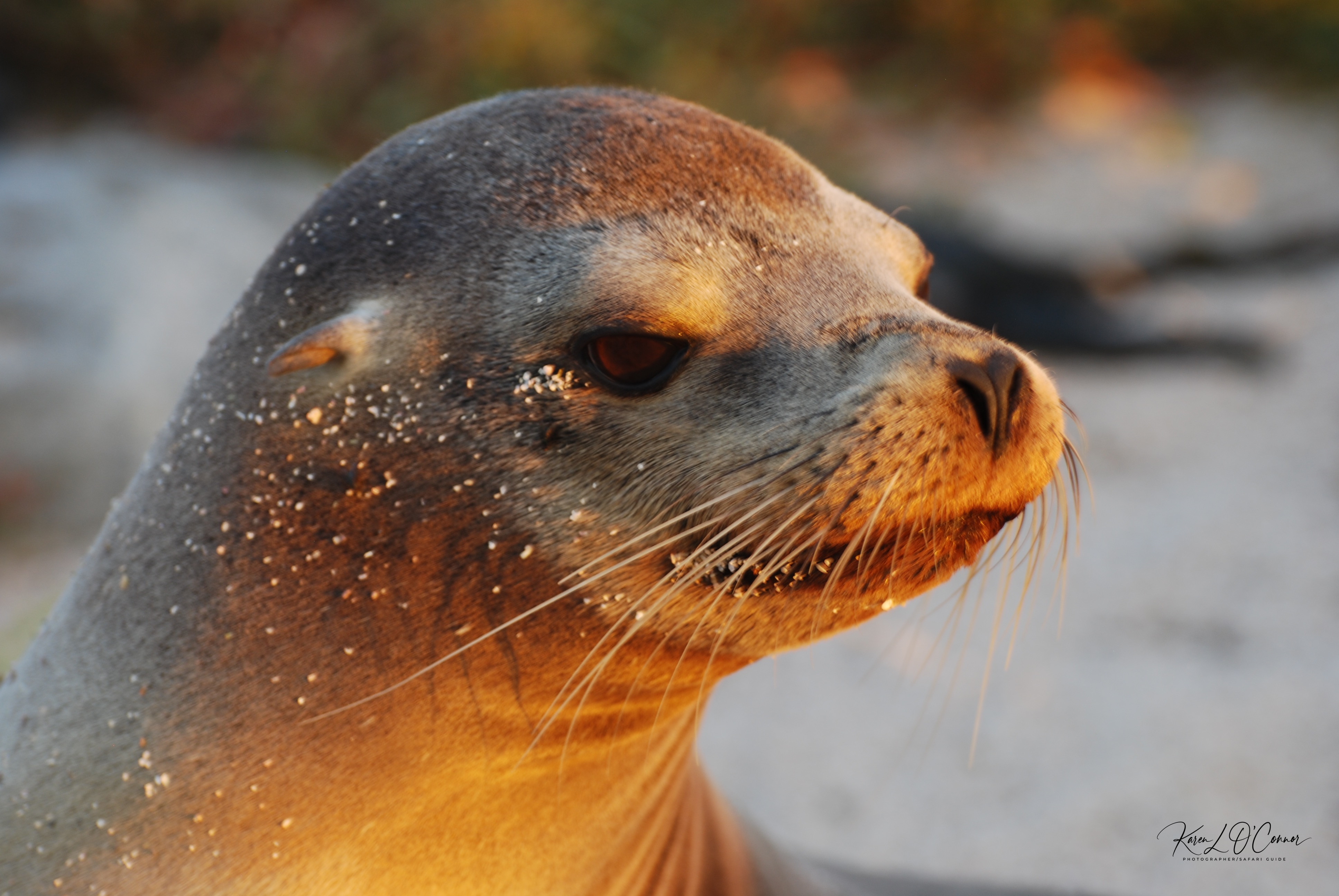
Charles Darwin in 1859 wrote ,”On the Orgin of Species,” which was the Theory of Evolution. This book was based on the Galapagos Islands. The islands are a UNESCO WORLD HERITAGE site. Due to the lack of predators, the wildlife is playful & friendly such as sea lions and gigantic tortoises.
Each island boasts its own unique landscape & is surrounded by the crystal gemstone-blue waters.
Sally Lightfoot crabs
I found myself in love with the islands. I travel by myself and as a single woman, I wanted to go on a trip that I could do a lot of photography and learn more. I did research on the Galapagos Islands and made a decision to go with Lindblad Expeditions and was not disappointed.
Traveling on your own takes some courage, but once you have done it, you might find you love it. Not all the time, but once in awhile, I like the options of doing what I want, when I want and not have to have a discussion about it. It gives you a chance to get out of your comfort zone and make new friends. I chose the Galapagos as a location to go single and it forced me to ask others on the trip if I could sit with them during meals, hike, etc and because of that I met some wonderful people that I don’t know if would have, if I was with someone. Traveling solo has benefits and downfalls. The benefits are as I mentioned above, downfalls, I love to share my adventures with my friends and family so now I am very picky on who I travel with or I go solo.
Bright Sally lightfoot crabs, marine iguanas and tiny penguins are some of the wildlife that are residents of these amazing islands. I was blown away at the beauty and various landscapes and wildlife on the different islands.
As a photographer, there were so many things to take pictures of, not only on land, but the marine life is mind-blowing! Lindblad Expeditions offered daily boat rides to the islands and had naturalists leading us on wonderful guided tours on the different islands. No two islands are alike and differ in scenery.
Traveling to the Galapagos Islands is like going to Eden. You will be captivated by the unique animal life above & below the Earths surface. The islands are located 600 miles off the coast of Ecuador’s mainland. The islands are various sizes and home to some of the rarest wildlife on the planet. Animals that you may encounter are the Giant Galapagos tortoises, blue & red-footed boobies, marine iguanas, Darwin’s finches, roaming penguins, frolicking sea lions, wandering Sally lightfoot crabs, hammerhead sharks, dolphins, sea turtles and so much more for your enjoyment.
Lonesome George. He was a staple at a the Galapagos National Park, believed to be 100 years old and the last of his subspecies, the Pinta tortoise. He has since died but remains a celebrity in the islands.
Galapagos Islands are a great display of biodiversity.
The blue-footed boobies, the swallow-tailed gulls, and the frigate birds along with red-footed boobies caught my attention as a birder.
The Galapagos Islands are located in the Pacific Ocean and have several islands, but you can’t visit every one. It is know as a “living museum & showcase of evolution.” Because it sits at the confluence of 3 ocean currents, the Galapagos are a “melting pot” of marine species. There is ongoing seismic and volcanic activity which is reflective of the processes that formed the various islands. Together with the isolation of the islands it makes for a perfect development of unusual wildlife. One thing I highly recommend when you visit is to go snorkeling or scuba diving. I had a chance to swim with sharks, penguins, sea lions turtles and a variety of fish. What a magnificent display of activity under the water. The marine life was playful and curious. No other place have I ever been accompanied on my snorkel tour by a young and curious sea lion.
There are 127 islands, but I recommend visiting a few of the following:
Floreana Island, Office Bay or free “postal service,” where travelers can take and leave postcards & letters with no stamps. The idea is…travelers go through the stacks of postcards and take them back to their hometown and you can hand deliver to the intended recipeint.
Santa Cruz Island, home to the Charles Darwin Research Station.
Genovesa Island, best place to see the red-footed booby. This island is home to the smallest marine iguana and the nutrient rich waters attract lots of hammerhead sharks.
Isabela Island, flamingos & penguin sightings along with all five subspecies of giant tortoises reside here.
Fernandina Island, here you are likely to find the largest population of flightless cormorants and the biggest iguanas. This island is also the most volcanically active island without any introduced species so it is in a league of its own.
North Seymour Island, a birders paradise. Here you can see the blue-footed booby, swallow-tailed gulls, tropicbirds, Nazca boobies and the frigate birds. It is also a fantastic place to snorkel or scuba dive. The waters are filled with tiger sharks, Galapagos sharks, sea turtles and manta rays. Definitely a must!
Española Island, this is the southern most island and one of the oldest. It is estimated to be over 4 million years old and full of wildlife.
Start planning a trip for the future and enjoy every minute.
Vineyards, lakes, beaches wildlife and beauty abound in Sonoma County. One of the most beautiful places in the world, I am lucky to call home. I find myself daily finding objects or landscapes to photograph.
My favorite time of year is spring when all the mustard is in full bloom throughout the vineyards. Fall brings vibrant reds, oranges & yellows with plump grapes clinging to the vines.
Traveling to Northern California you have so many choices of things to do that it can be overwhelming. It is so beautiful that the nice thing is once you are here you most likely will fall in love with the area and you can return over and over.
Wine tasting is a highlight. You not only have Sonoma but you also have Napa & Mendocino County. The difficulty is which winery to choose from. I definitely have my favorites because each winery has its own unique location, wines, gifts, views & experiences. I hope to highlight various wineries in this blog.
If you have been itching to travel, but don’t know where to go and you are afraid to get on an airplane – visit Safari West.
Located in Northern California, in the heart of the Sonoma Wine Country.
You can even stay at the facility. There are 30. magnificent tents that are decorated as if you were in Africa, minus the expense and hassles.
Kid friendly, grandparent friendly & company friendly.
How exciting to be coming up to Safari West and as you pull into the gates you are transported to Africa. They have anywhere from 900-1000 animals, depending on if it is baby season.
Escape the confines of your home and get out and explore. Safari West is that perfect find.
Watusi Cattle otherwise known as Ankole Cattle, or the “Cattle of the Kings”. They are breed for those spectacular horns. The horn average is 8 feet across – record 13 feet. Talk about a huge rack!!!!!
The cattle are treated as sacred to the significance they play in the families of the cattle keepers because they believe the cattle will care for their families. They are also used to determine status in society.
Giraffe’s have dark purple tongues (no not from drinking too much of this fantastic Sonoma wine), and it is 16-20 inches long.
The color is to protect it from the sun while it is eating. They love to stick it out at us while on tour.
Aoudad – one of my favorites with the magnificent hair under its chin & behind the legs. This is one of the handsome males up at Safari West. Ask one of your guides what all that hair is for and wait till you hear the answer – ewww!
Travel is my passion & photography is my love! I have had so many wonderful opportunities and decided to combine my love of both to create my dream job.
I began with taking pictures around our Guest Ranch, Sky Corral Guest Ranch, and from there it turned into traveling to places like India, Spain, England, Egypt and so many other locations.
When I got the news that I had breast cancer, I thought, this is just a bump in the road. It actually spurred me on to travel more, photograph my trips and eventually begin my travel business. The diagnosis and the treatments gave me plenty of time to go out and take pictures. After the end of Chemotherapy treatment, I decided to go to Africa and take my number one item off my bucket list.
Little did I know, this would spur my love of animals, travel & photography together and create my passion for taking people over to Africa and beginning KLSafaris.
My goal originally was to take wonderful pictures and create a book that I could give to cancer patients. Something patients could do to escape while sitting in the chair getting an infusion.
My second trip to Africa happened after finishing cancer treatments for a second time 10 years later. After all the surgeries, I was drawn to go back to Africa.
This blog will follow my travels to South Africa this year in April for future guests to see all the amazing places I plan to visit. I will be featuring accomodations, people, activities, photos and exciting details of the trip I am offering for 2022.
I hope to inspire people to go out and find their own adventures and passions.
Why am I doing this? I want people who follow me to get out of their comfort zone and begin to journey out, even if it is in your own hometown.
This blog will cover my travels with pictures and stories.
If you like to travel, meet people, learn about animals, cultures and places, follow I encourage you to follow me.